The full encyclopedia
Every leaf, region, and tradition.
25 articles across 8 topics, written by 5 contributors.
By topic
8 topics
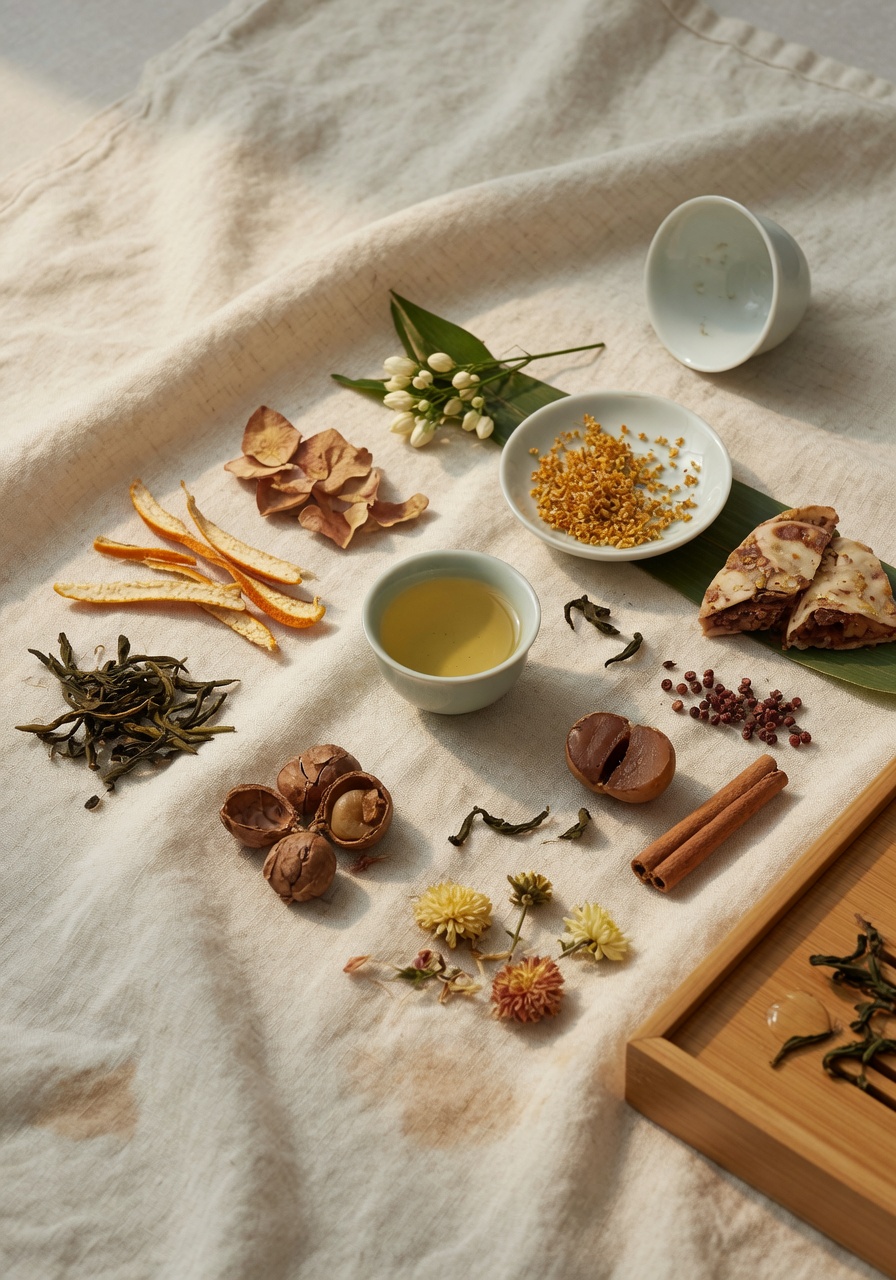
The named aromas that shape Chinese tea evaluation
5 articles
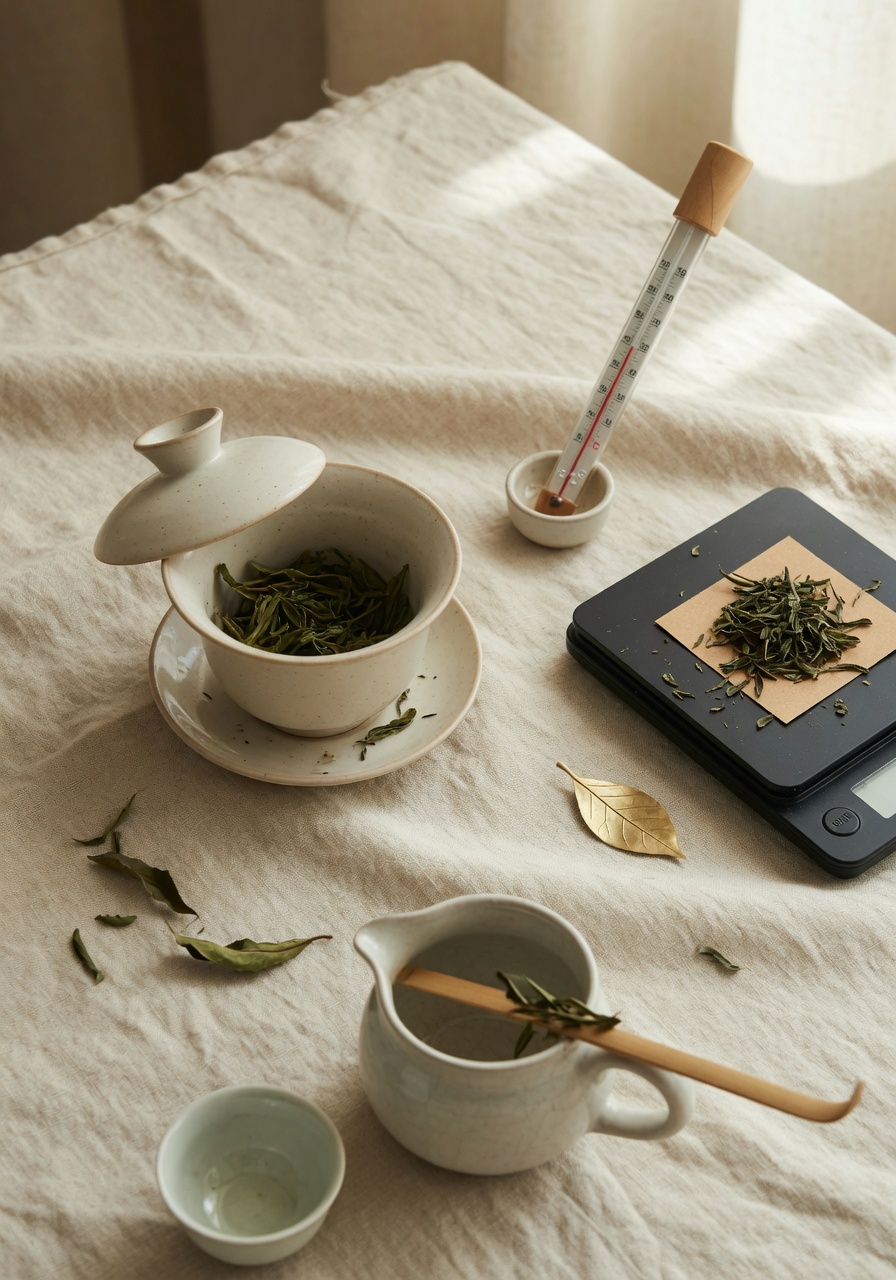
Four dials, one cup — calibrating the brew
4 articles
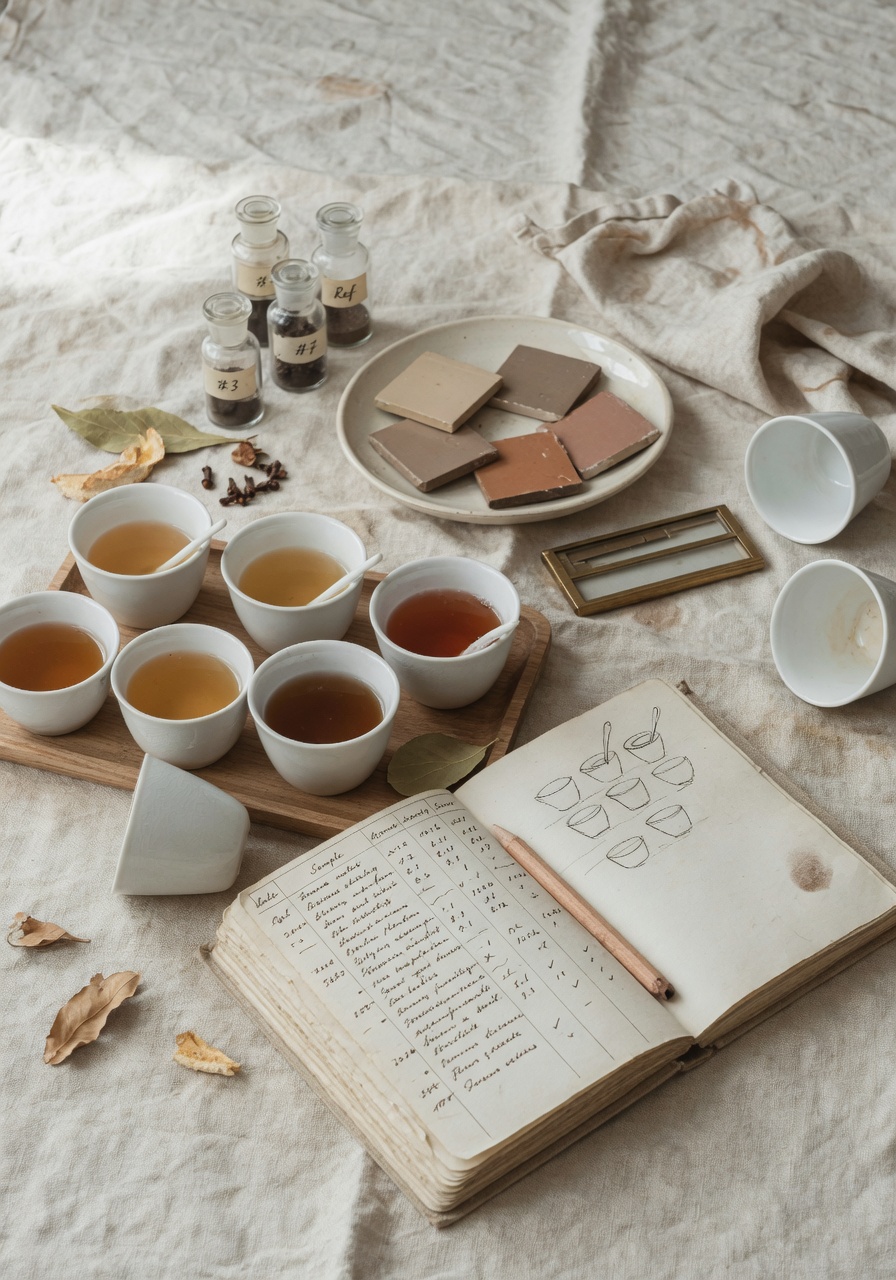
Six weeks to a standard palate
1 article
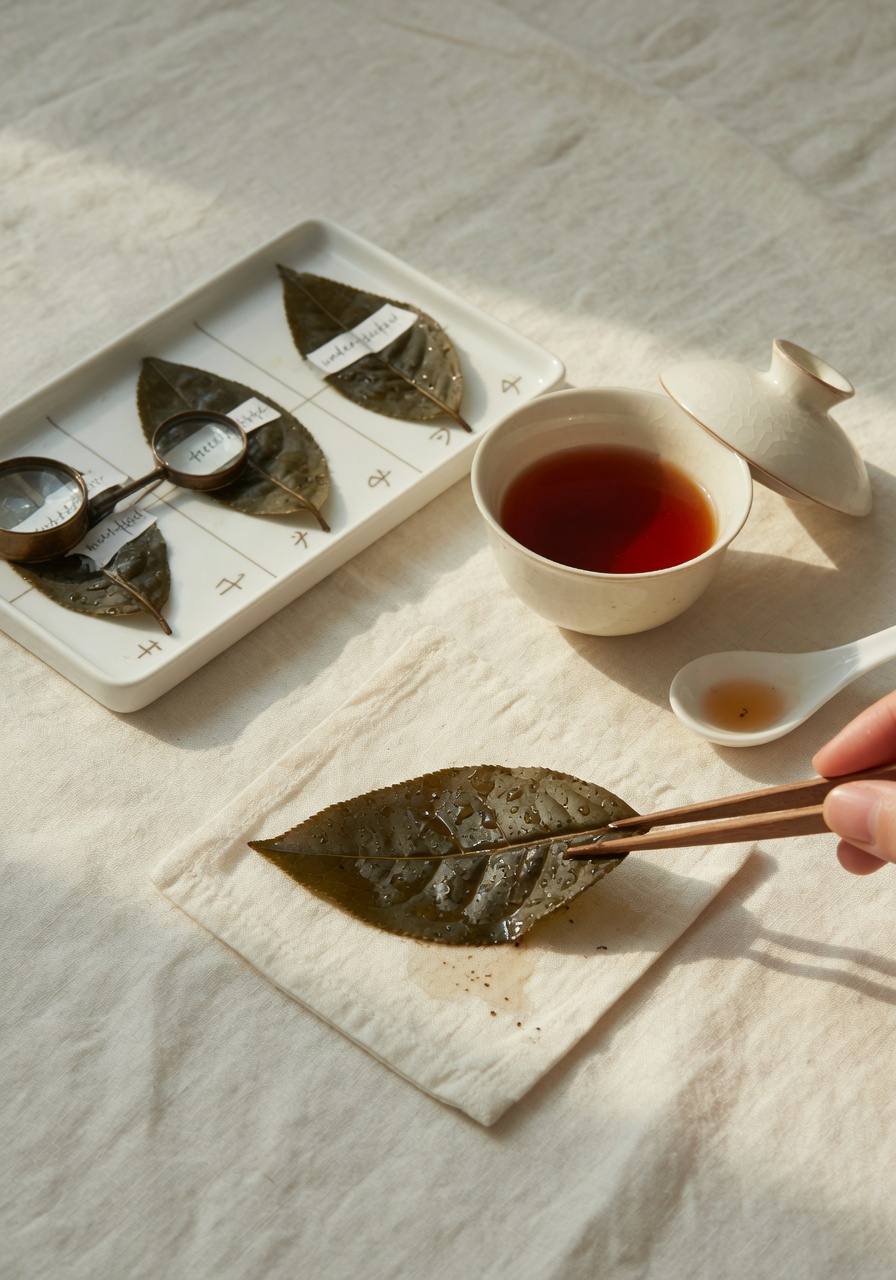
Reading the off-notes — a sommelier's defect lexicon
4 articles
The blind map — anchoring regional character
3 articles
How a cup is scored — the mathematics of tea evaluation
2 articles
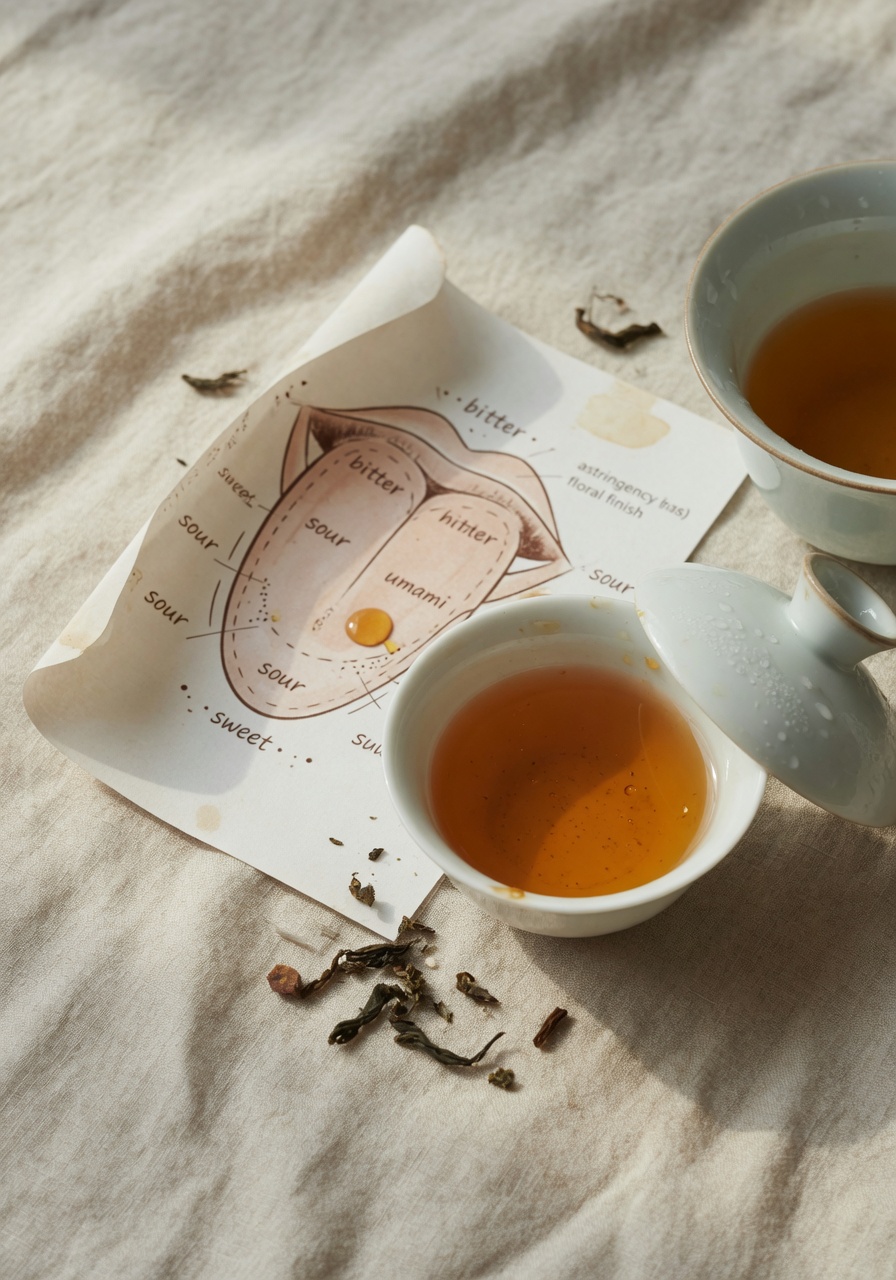
The vocabulary of mouthfeel, anchored to the cup
4 articles
The leaf after the liquor — how to read the spent leaf
2 articles
All articles
25 pieces, latest first
- — 01
100-point vs 20-point rubric — when each is right
A tea buyer faces the same question every morning: is this tea an 87 or an 89? The answer can shift a price per kilogram by hundreds of yuan. But when does that fine grain matter, and when does a simpler 20-point scale serve the taster better? We unpack the two dominant scoring rubrics in Chinese tea appraisal and show where each earns its keep.
- — 02
Astringency and mouth-feel — building a 5-point scale
Astringency is the tactile sensation that shapes a tea's architecture — not a taste, but a mouth-feel. Professional graders score it on a scale from silky absence to harsh grip. Here's how to build a calibrated 5-point scale that works across white, green, yellow, and beyond.
- — 03
Bitter without return vs bitter with return — scoring practice
In tea evaluation, bitterness is not a defect — it’s a signal. Learn to distinguish the flat, lingering bitterness that mars a session from the vibrant, transforming bitterness that presages a wave of returning sweetness (*huígān*), and master the scoring criteria used by professional graders at tea.degree.
- — 04
Body and mouth-coating — calibrating the heavyweight teas
Why some teas feel like velvet, others like water. A technical calibration of body and mouth-coating in heavyweight teas, from pu-erh to dark teas.
- — 05
Flat tea — what a flat pour tells you about the lot
A flat pour is more than a muted first impression — it is a diagnostic fingerprint of processing failure, storage neglect, or fundamental leaf weakness. This article maps the causes, sensory hallmarks, and scoring discipline needed to grade flatness on tea.degree’s 10-axis rubric, drawing on Chinese national standards and insight from Chen Hui Yi and the Teamotea expert roster.
- — 06
Floral aroma cultivars in Phoenix dancong — by named cultivar
The sensory wheel of Phoenix dancong is anchored by its named floral cultivars — each a distinct genetic lineage with a signature nose. Mei Yang profiles seven iconic floral xiāng types, from the magnolia-deep Yùlán Xiāng to the jasmine-almond twist of Yāshǐ Xiāng, tracing their origins, volatile chemistry, and how they land on the 16‑segment wheel used at tea.degree.
- — 07
Fuding vs Zhenghe white tea — blind recognition
Two counties separated by 200 kilometres produce China's most celebrated white teas — yet their genetic, climatic and processing differences are so stark that a trained taster can distinguish them blind. This article supplies a systematic framework: leaf morphology, aroma chemistry, liquor character and mouthfeel.
- — 08
Honey aroma in aged tea — what causes it, how to score it
The warm, nectarous scent of honey in aged tea is not a simple varietal trait — it emerges from decades of biochemical transformation. Amgalan Chin unpacks the science, the storage conditions, and the scoring practice that turns fleeting sweetness into a calibrated sensory note.
- — 09
Huígān — the returning sweetness, scored
The sweetness that arrives after the tea is gone is the most discussed and least defined sensation in Chinese tasting rooms. Here is how to anchor it on a 10-axis rubric.
- — 10
Leaf structure intactness — grading consistency
An intact leaf in the bottom of the gaiwan carries the story of plucking, withering, rolling, and firing. Grading intactness isn't about perfection — it's about reading how the leaf has navigated its journey, and converting that narrative into a consistent, repeatable score.
- — 11
Leaf weight and extraction — calibration tables
How a precise ratio of leaf to water — sometimes as little as a one-gram shift — can open or close an entire tea’s aromatic architecture. A calibration framework for professional tasters and serious home brewers.
- — 12
Mineral aroma in Wuyi rock teas — the yán yùn signature
How a tea can taste like a stone — the yán yùn (岩韵) signature is the defining character of Wuyi rock tea, yet it remains one of the most elusive concepts in Chinese tea evaluation. This article breaks down the geology, processing, and sensory language needed to identify, score, and calibrate the mineral aroma that sets yán chá apart.
- — 13
Musty defect — distinguishing storage fault from aged character
A musty aroma on a pu-erh cake can mean a priceless aged treasure or a ruined, unsafe tea. Learn the chemical markers, sensory cues, and calibration drills that separate storage fault from legitimate aging character.
- — 14
The official tea.academy rubric explained, criterion-by-criterion
A criterion-by-criterion tour of the 100-point sensory evaluation system that anchors tea.academy examinations and professional trade buying — from dry leaf geometry to the last echo of sweetness on the breath.
- — 15
Orchid vs longan aroma — telling them apart
Two of the most over-used descriptors in Chinese tea evaluation sit only one nuance apart. This is a field guide to keeping orchid and longan distinct in your nose, your notes, and your scoring sheet.
- — 16
Phoenix dancong vs Wuyi yancha — blind-recognition practice
Can you tell a Phoenix dancong from a Wuyi yancha blind? These two great oolong traditions, separated by 700 kilometres, can confuse even experienced tasters when the roast is deep or the floral notes overlap. This blind-recognition practice arms you with a structured framework, from geography to aftertaste, so you can anchor regional character with confidence.
- — 17
A six-week sensory calibration programme
Six weeks, six reference teas, one notebook. A structured programme to align your tasting scale to the GB/T standard — and to the cuppers who set it.
- — 18
Smoky — defect or terroir character?
Wood smoke in the cup can mean a careless drying shed, a thunderstorm that forced the producer indoors, or a four-hundred-year tradition. The cupper's job is to tell which — and to score accordingly.
- — 19
Sour defect — three common causes, how to recognise each
Sourness in tea can be a bright, mouth-watering note from natural fruit acids or a sharp, vinegar-like flaw that signals a failure in processing or storage. In the sensory framework of tea.degree, understanding the difference is essential for accurate scoring. Fang Ting, Senior Tea Expert, untangles the three most common origins of sour defects in Chinese tea — under-fixation in green tea, fermentation imbalance in oolongs and blacks, and humidity-driven souring in aged pu-erh — and explains how to recognise each through aroma, taste, and timing on the palate.
- — 20
Temperature curves across the six categories of Chinese tea
Water temperature is not a single number — it is a curve that bends with leaf maturity, oxidation, and the steep you are on. A working map for green, yellow, white, oolong, red and dark tea.
- — 21
Vessel effect on extraction — gaiwan vs Yixing vs glass
A gaiwan, a Yixing teapot, and a glass vessel can all brew the same leaf — but they will never brew the same tea. Fang Ting unpacks the thermal, physical, and chemical reasons why vessel choice is not a matter of aesthetics, but a primary extraction variable.
- — 22
Water TDS and tea character — measured calibration
Total dissolved solids shape every brew — yet many tasters overlook the one ingredient that never touches the scale. A structured calibration protocol using three water profiles reveals how minerality transforms aroma clarity, body, and lasting sweetness across all six Chinese tea categories.
- — 23
Wet-leaf colour evenness — what each pattern tells you
Colour evenness in the spent leaf is not about beauty — it is a map of processing decisions, oxidation control, and storage history. This deep reading of *yè dǐ* reveals where a tea has been and what it might become.
- — 24
Woody aroma and storage age — the scoring relationship
Understanding how storage age shapes woody notes in Chinese tea — from fresh sappy wood to antique sandalwood — and how to score this evolution using the tea.degree sensory wheel and 10-axis rubric.
- — 25
Yiwu vs Bulang sheng — blind-recognition practice
How to distinguish the soft, sweet opulence of Yiwu from the bold, bitter power of Bulang when the label is hidden. A systematic calibration drill for seasoned tasters.
Contributors
5 writers
Amgalan Chin
Cross-Regional Tea Expert & Technical Specialist
Amgalan Chin grew up along the historical Tea Road that once carried brick tea from Hubei to Ulan-Ude and beyond. His family, ethnic Buryat traders, had kept a quiet tradition of storing pu-erh in the dry Siberian cellars, a practice he later formalised into a cross-regional aging methodology. In his twenties, he travelled to Yunnan, apprenticing under Zhang Gui-lin, a former state-factory tea master who had overseen the early days of Menghai Tea Factory’s *shēng pǔ'ěr* production. Zhang taught him the subtleties of blending and the importance of understanding the leaf’s origin down to the single-tree level. Amgalan then spent five years living part-time in *Yìwǔ* and *Bùlǎng*, building relationships with minority farmers — among them, a Yao family in Gaoshan village who became his primary source for Yiwu maocha, and a Bulang estate in Manxin that supplied the powerful base for his signature aged sheng. He also deepened his understanding of Mongolian and Russian tea culture, working with researchers at the Institute of Oriental Studies in Buryatia to document the tea-brick trade routes that had supplied the region since the 17th century. Today, Amgalan divides his time between a temperature-controlled cellar near Irkutsk and seasonal sourcing trips to Xishuangbanna. His approach to pu-erh aging treats the cellar as an instrument: he maps humidity, temperature, and airflow against tea density, then adjusts parameters not to replicate Kunming or Guangdong, but to achieve a distinct “northern” character — slower oxidation, cleaner transformation, and a pronounced clarity in the cup. His work on aged tea scoring bridges the gap between traditional storage wisdom and analytical rigor. In his article “Musty defect — distinguishing storage fault from aged character,” he lays out a decision tree that uses wet-leaf colour evenness, an area he explored further in “Wet-leaf colour evenness — what each pattern tells you.” He often tells students in his tea.school pu-erh path: “If the colour is uneven after three infusions and the aroma tilts toward damp cellar rather than old books, you’re likely looking at a storage fault, not age.” That precision is a hallmark of his teaching. Amgalan’s sensory scoring focus on texture led to his calibration piece “Body and mouth-coating — calibrating the heavyweight teas,” now a standard reference on tea.degree. He teaches that mouth-coating should be measured not just by intensity but by finish length and granularity — distinguishing *Bùlǎng*’s broad, tannic coat from *Yìwǔ*’s silken elegance. His “Yiwu vs Bulang sheng — blind-recognition practice” article translates his field experience into a training protocol for advanced tasters, using a matrix of aroma, texture, and aftertaste markers. He is also the curator of the “Trans-Siberian aged pu-erh” collection on shop.puerh.app, offering teas that exemplify the northern aging style, including a 2010 autumn Bulang brick that he personally selects and monitors. At tea.degree, Amgalan champions the cross-cultural vocabulary needed to describe aged teas. He contributed the Russian and Mongolian sensory term sets to the vocabulary library, ensuring that nuances like “суховатость” (dryness that is structural, not a flaw) have a place alongside English descriptors. His cohort on tea.community, “Cellar notes,” is a gathering of serious aging practitioners who share monthly logs of tea development. Through all these platforms, Amgalan brings a slow, technical, and profoundly border-crossing perspective to pu-erh, dark tea, and the living art of aging.
Chen Hui Yi
Senior Tea Expert (White, Green & Yellow Tea Varieties)
Chen Hui Yi works out of a small cupping room in Chaozhou, eastern Guangdong, but her professional life has always pointed north — towards the white-tea hills of Fujian and the older sun-drying traditions that survive in pockets of Guangdong's own Dapu and Raoping counties. She trained first as a green-tea sorter at a state-owned factory in Meizhou in the late 1990s, then spent four formative years apprenticing under Lin Zhencheng, a Fuding *Bái Háo Yín Zhēn* (白毫银针) maker who insisted his students learn withering by the smell of the bamboo trays before they were allowed to touch a thermometer. Lin's discipline — wither by nose, finish by hand — still shapes how Chen approaches every white tea that crosses her bench. Her technical focus is the chemistry and sensory drift of aged whites. Between 2011 and 2019 she built a reference vault of 184 *Shòu Méi* (寿眉) and *Bái Mǔ Dān* (白牡丹) cakes, pressed in single years from named gardens in Guanyang, Diantou and Panxi, and re-cupped on a fixed annual schedule. The dataset underpins much of her writing on tea.degree, including the six-week calibration programme she designed for new tasters — a structured sequence that pairs blind triangles against a fixed reference cake so that students learn to separate genuine age from storage artefact. The programme is now also taught on tea.school as part of the white-tea path. Chen's Guangdong base gives her an unusually wide sensory vocabulary. The province's *Fèng Huáng Dān Cōng* (凤凰单丛) oolongs share aromatic territory — orchid, honey, stone fruit — with high-grade *Bái Mǔ Dān*, and she has spent years sitting at Dan Cong tables in Wudong village to refine her palate for the floral-fruit boundary. That work feeds directly into her tea.degree entry on telling orchid from longan aroma, which uses Dan Cong samples as the contrast set against Fuding whites. Her piece on smoky character — defect or terroir — draws on the same comparative approach, using Zhenghe pine-withered whites alongside Wuyi rock teas to argue that smokiness is rarely a single phenomenon. She contributes to the constellation in several roles. On shop.thetea.app she is the senior vendor curator for white, green and yellow varieties, signing off lot-level quality reports before any cake or loose-leaf batch is listed. On tea.doctor and puerh.app she writes the white-tea sections — particularly entries on long-stored whites and the overlap with *Shēng Pǔ'ěr* (生普洱) aroma profiles after fifteen-plus years. For tea.degree she leads vocabulary work on aged whites, moonlight white, and the underrepresented *Huáng Yá* (黄芽) yellows from Mengding and Junshan. Her working method is documentary. Every cupping is logged with water source, vessel weight, infusion times and a 10-axis score, and she expects her co-authors to do the same. She is sceptical of romantic vocabulary that cannot be reproduced across three tasters, and her editing tends to strip articles down to claims that can be verified against GB/T 22291-2017 (white tea) and GB/T 14487-2017 (sensory terminology). When she does allow a poetic phrase, it is usually borrowed from Lin Zhencheng — most often his observation that a properly withered silver needle should smell, on the dry leaf, like the inside of a cedar drawer at the end of summer.
Fang Ting
Senior Tea Expert (Oolong, Green & Puerh Varieties)
Fang Ting grew up in Xinyang, the southernmost prefecture of Henan, where the Dabie mountains catch the last northern edge of subtropical climate and *Xìnyáng Máojiān* (信阳毛尖) has been pressed into the local economy for eleven centuries. Her grandmother kept a five-*mǔ* plot above Dongjiahe village; Fang's earliest tea memory is sorting frost-bitten leaves at age seven, paid in candied hawthorn. That northern-fringe upbringing shaped the analytical habit she now brings to tea.degree — she learned green tea in a climate that makes green tea barely viable, where every degree of *qīngmíng* (清明) week matters and every leaf is interrogated for what the season took or gave. She trained formally between 2009 and 2013 at the Xinyang Agricultural and Forestry University tea science department under Professor Guo Guimei, whose work on amino-acid ratios in *Máojiān* (毛尖) still anchors the GB/T 22737-2008 reference profile. After graduation Fang spent four seasons at the Wuyishan Tea Research Institute in northern Fujian, an unusual move for a Henan native; she wanted to understand *yánchá* (岩茶) processing from the inside rather than translate it secondhand. Her mentor there was Chen Dehua, a fifth-generation *Shuǐ Xiān* (水仙) roaster from Tongmu valley, who taught her the three-charcoal *bèihuǒ* (焙火) cycle and — more importantly — taught her to score roast intensity against returning sweetness rather than against surface aroma. That lesson became the spine of her work at tea.degree. Her article *Huígān — the returning sweetness, scored* lays out a six-point rubric distinguishing simple residual sugar from true *huígān* (回甘), the throat-rising sweetness that follows astringency by twelve to forty seconds. She built the rubric across 340 cupping sessions between 2019 and 2022, with reference samples drawn from Wuyi *Ròu Guì* (肉桂), Yiwu spring *gǔshù* (古树) pu-erh, and her own Henan *Máojiān*. The scoring framework is now used by the tea.school examiner panel and feeds the radar component on the tea.degree compare view. Her second contribution, *Temperature curves across the six categories of Chinese tea*, was written after a 2023 disagreement with three colleagues over whether 85 °C or 92 °C better expressed a Mengku autumn raw pu-erh. Rather than argue, Fang ran the cupping at eleven temperatures from 70 to 100 °C and plotted catechin extraction against perceived bitterness. The resulting curves — one per category, with sub-curves for aged versus young pu-erh — are now baked into the tt-sensory-wheel-pro calibration defaults. Fang holds the National Senior Tea Evaluator certificate (一级评茶师, 2017) and sits on the Henan provincial tea expo judging panel. She appears as senior expert on shop.thetea.app and shop.puerh.app for oolong and pu-erh selections, contributes diagnostic pieces to tea.doctor on over-roasted and waterlogged leaf, and leads the intermediate oolong and introductory pu-erh paths at tea.school. She still returns to Dongjiahe every April for the *qīngmíng* pluck, where her grandmother's plot is now managed by a cousin and yields roughly forty-two kilograms of finished *Máojiān* a year — most of which Fang uses as her northern-green reference baseline when scoring.
Mei Yang
Senior Tea Expert (Oolong & Black Tea Varieties)
Mei Yang grew up in the foothills of *Wūdōng Shān* (乌岽山), where the morning mist clings to old tea bushes and the scent of roasting leaves drifts through every village lane. Her earliest memories are of walking through Pingkeng’s terraced gardens with her father, a smallholder who cultivated a handful of *Xiān Táo Xiāng* (仙桃香) and *Yā Shǐ Xiāng* (鸭屎香) bushes — just enough to sell fresh leaves to the local cooperative. By age fourteen she could name a dozen fragrance types by nose alone, a skill her grandmother called 'the ear of the leaf,' a family phrase meaning the ability to listen to what the tea wants to become. Her formal training began at seventeen under Master Huang Zhiming, a fourth-generation dancong maker whose family had tended the same cluster of old-growth bushes above 1,100 metres since the late Qing dynasty. Huang taught her the full arc from *shài qīng* (晒青) to *tàn bèi* (炭焙), insisting she work the bamboo trays and charcoal stoves in silence for the first two years 'until the hands know more than the mind.' This apprenticeship forged her distinctive single-bush perspective: the conviction that every individual tree — not every garden, not every village — has its own aromatic signature and processing optimum. Her specialisation in *mì lán xiāng* (蜜兰香) emerged organically. The honey-orchid cultivar was her family’s flagship, and she spent five years documenting how elevation, soil pH, and picking date shift its expression from creamy florals to ripe stone fruit. This work formed the basis of her fragrance taxonomy, a system now used in professional cupping sessions that maps over thirty distinct dancong aroma profiles to specific bush lineages and processing parameters. Senior tea buyers from Guangzhou to Singapore rely on her classification when sourcing single-bush lots. Mei’s expertise extends naturally into black tea territory. She first visited the Tongmu *Zhèng Shān Xiǎo Zhǒng* (正山小种) region in 2012, drawn by the smoky pine character that reminded her of certain heavily roasted dancong. Spending successive springs in the Wuyi mountains, she built relationships with smallholders producing *Jīn Jùn Méi* (金骏眉) from high-altitude tips and worked alongside a master smoker in the Green Village to refine her understanding of pinewood curing. Her comparative work on the interaction between cultivar chemistry and oxidation depth in oolong versus black tea processing has been published in several internal research briefs and teaching materials at tea.school. Her deep dive into floral aroma cultivars, 'Floral aroma cultivars in Phoenix dancong — by named cultivar,' became a reference for distinguishing the eight core fragrance families, and she is currently compiling a companion piece on honey and fruit tones in *mì lán xiāng* production batches. In her role as Senior Tea Expert at Teamotea, Mei oversees oolong and black tea curation for shop.thetea.app, offers Phoenix mountain speciality selections on shop.puerh.app, and leads advanced tasting paths for tea.school. She lives in Chaozhou with a small library of fired-clay teapots and a single-bush *Yā Shǐ Xiāng* tree planted in her courtyard — the same cultivar her father grew, now bearing leaves she processes entirely by hand every April.
Zhou Xiang
Senior Tea Expert (Green, Black & Yellow Tea Varieties)
Zhou Xiang grew up in the misted foothills of central Hunan, a half-day walk from the Dongting Lake wetlands where the region's most famous tea, *Jūnshān Yín Zhēn* (君山银针), is made. His first clear memory of tea is not of drinking but of watching a neighbour time the *mèn huáng* (闷黄) — the enclosed yellowing step — by pressing a cloth-bound mound of steamed buds to his cheek, feeling for the precise internal temperature that no thermometer could yet read. That early exposure to sensory judgement shaped a career that now spans three tea categories and two decades. Formal training began at the age of 16 under Master Wan Guowei, a retired tea-factory supervisor who had spent 40 years managing the Wuyunshan state farm. Wan insisted on a thousand graded tastings before his student could claim to understand *Lóngjǐng* (龙井) — not just the textbook chestnut notes, but the fleeting celery-salt trace that separates true Xihu leaf from Zhejiang imitations. Zhou later broadened his scope at the Hunan Tea Research Institute, focusing on the biochemistry of catechins during the yellowing phase, work that led to a series of factory-floor experiments in 2009 with the Junshan Island cooperative. Since joining Teamotea in 2014, Zhou has worn several hats. On shop.thetea.app, his vendor-verified notes for single-origin greens, blacks, and yellows give buyers access to the same quality markers he uses internally. At tea.school, he designed the Green Tea Path curriculum, which walks students through seven sub-categories using a progressive tasting framework originally developed for the tea.degree cupping panel. There, alongside fellow experts Chen Hui Yi and Fang Ting, he helped refine the 10-axis scoring rubric — the same rubric that powers the interactive scoring form on tea.degree. His published work bridges field practice and structured analysis. In 'Reading the Leaf: A Cupping Framework for Green, Black, and Yellow Teas' on tea.degree, he explains how stem-to-bud ratio, pan-fire sheen, and dry-leaf tension map onto the wheel’s 64 descriptors. Another article, 'Junshan Yinzhen: The Two-Day Yellowing Window,' written for thetea.app, draws on his production logs from 2011–2016 to show how barometric pressure during *mèn huáng* shifts the tea’s core floral profile. A third, 'Oxidation Profiles Beyond Puerh: Lessons from *Hóng Chá*' on puerh.app, argues that black-tea grading systems often overlook the gentle, honeyed oxidation rhythms of Hunan’s *Jīn Zhēn* (金针) and *Hú Hóng* (湖红) styles. In every tea.degree blind tasting, Zhou advocates for region-first calibration. He reasons that a scorecard without geographical anchoring — soil pH, slope orientation, harvest date — is a conversation without context. His Hunan address means that his own sensory memory is calibrated to lakeside humidity, sandstone soils, and a subtropical monsoon rhythm that swells buds two weeks earlier than in Hangzhou. That geographic honesty, he insists, is not a limitation: it is the only reliable starting point for a sensory wheel that claims to be scientific. When he trains new panel members, he gives each a sealed envelope containing a small sample of spring-picked *Jūnshān Yín Zhēn* and a single instruction — 'taste this leaf before you score any other yellow tea.'