tea.degree · sampling channel Encyclopedia · School · Atlas · Pu-erh · Equipment EN
tea.degree Browse all →

home · topic

Defect taxonomy

Reading the off-notes — a sommelier's defect lexicon

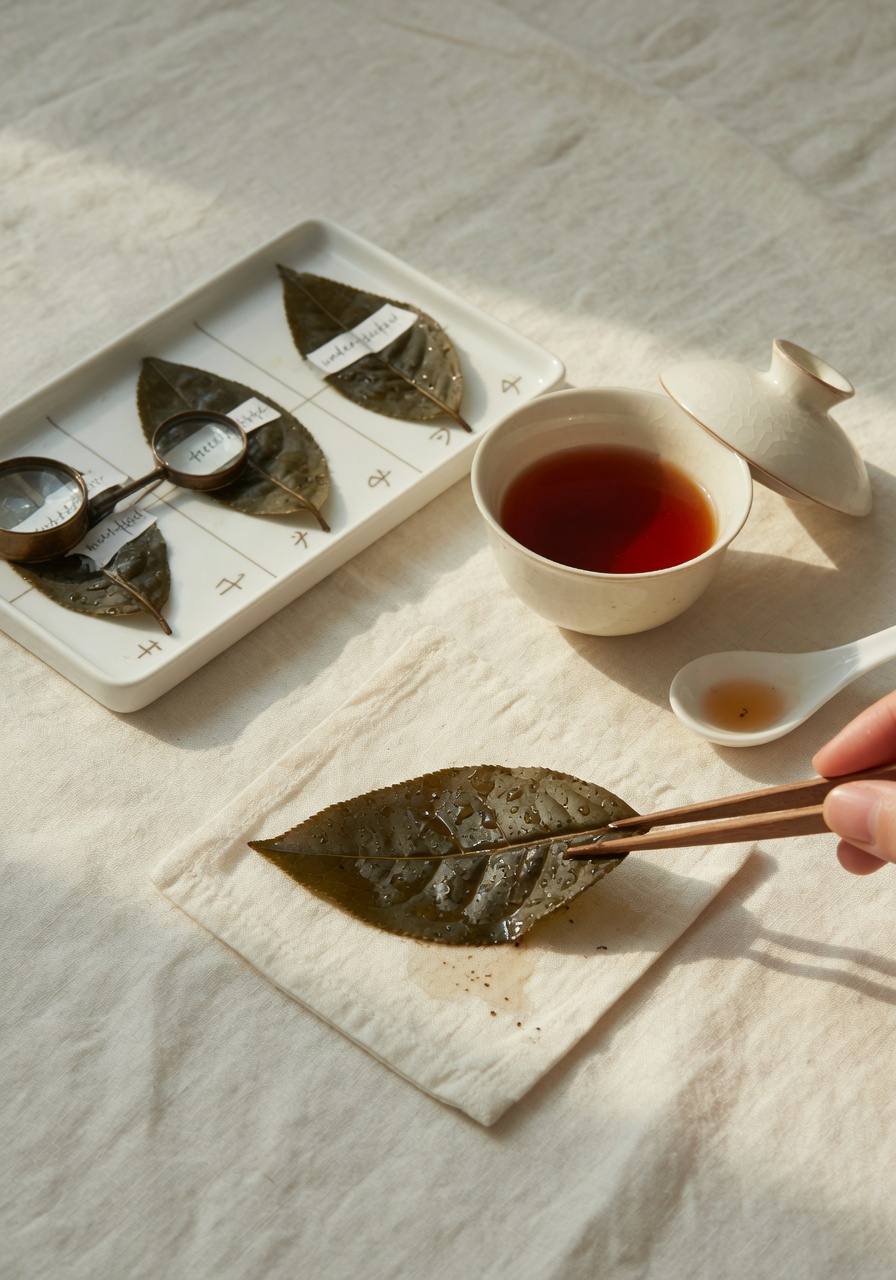
Smoky, sour, musty, flat, bitter without return — the vocabulary of tea defects is older than the vocabulary of virtues, because faults are what graders notice first. This topic catalogues the recurring off-notes a panel will mark down on a 10-axis card, separates processing accidents from regional signatures, and explains when a so-called defect is actually the point.

Reading the off-notes — a sommelier's defect lexicon

What a fault is, and what it isn’t

Defect language in Chinese tea grading predates the modern sensory wheel by several centuries. The Qing-era gōngfū (工夫) graders at Wuyi already used terms like jiāo (焦, scorched), suān (酸, sour) and mèi (霉, musty) to dock lots before they reached the merchant houses on Xiamen wharves. When the national standards office codified GB/T 23776–2018 — the current sensory evaluation protocol for tea — those same three roots survived almost untouched, joined by qīng (青, grassy/raw) and guò huǒ (过火, over-fired). A defect, in this lineage, is not simply an unpleasant note. It is a note whose cause can be traced back to a specific failure of withering, fixing, rolling, oxidation, drying or storage.

This is the distinction the topic insists on. Smoky is the canonical example, and the reason we opened the section with Smoky — defect or terroir character? A campfire note in a Zhèng Shān Xiǎo Zhǒng (正山小种) from Tongmu village in northern Fujian is the entire identity of the tea — pine-smoke drying in the qīng lóu (青楼) loft has been documented at the Tongmuguan checkpoint since at least the 1640s. The same note in a Yunnan dian hong is a fault: a leaky drying oven, a chimney drawing the wrong way, a batch rescued from rain. Same molecule (guaiacol, 4-methylguaiacol), opposite verdict. The grader’s job is not to like or dislike it, but to ask whether the producer intended it and whether the rest of the leaf supports the claim.

The other faults follow the same logic. Sour usually means a stalled kill-green or a wet-piled leaf that began fermenting before it should have — common in rainy-season máochá from Lincang, less common from drier Menghai. Musty (cāng wèi, 仓味) almost always points to storage: cardboard, humidity above 75 percent, or a warehouse that shared air with spices. Flat means the volatile top notes have outgassed, often because the tea was milled or repacked too aggressively. Bitter-without-return — kǔ ér bù huà (苦而不化) — is the cruellest defect to diagnose because it can come from anywhere: over-plucked summer leaf, nitrogen-heavy fertiliser, a fixing pan held twenty seconds too long. A trained panel separates it from honest astringency by counting seconds: real huí gān (回甘) arrives within twelve to twenty seconds of the swallow; a defect lingers as a flat metallic bitterness and never sweetens.

Why does any of this matter outside the cupping room? Because the price difference between a graded and a downgraded lot at the Fuding white-tea auctions, or at the Xishuangbanna spring market, routinely runs three to one. A buyer who cannot name a fault cannot negotiate it, and a producer who cannot diagnose one cannot fix it next season. For sommeliers writing menus — see the service notes on tea.degree and the pairing logic catalogued at thetea.app — defect literacy is also what separates a confident menu description from a defensive one. You can sell smoke, oxidation, even a touch of cāng wèi in an aged shou — but only if you know what you are selling, and only if the rest of the cup earns it.

27 articles

In this topic

  1. — 01

    الشاي المسطح — ما يخبرك به الصب المسطح عن الدفعة

    الصب المسطح ليس مجرد انطباع أولي باهت — إنه بصمة تشخيصية تدل على فشل في المعالجة، أو إهمال في التخزين، أو ضعف أساسي في الورقة. يستعرض هذا المقال الأسباب، العلامات الحسية، وقواعد التقييم اللازمة لتصنيف التسطّح وفق نموذج tea.degree ذي المحاور العشرة، مستندًا إلى المعايير الوطنية الصينية ورؤى من تشن هوي يي وفريق خبراء Teamotea.

  2. — 02

    عيب العفونة — التمييز بين خطأ التخزين والطابع المُعَتَّق

    رائحة العفونة على قالب pu-erh قد تعني كنزاً مُعَتَّقاً لا يُقدَّر بثمن أو شاياً تالفاً غير آمن. تعرَّف على المؤشرات الكيميائية والإشارات الحسية وتمارين المعايرة التي تُميِّز خطأ التخزين عن الطابع المُعَتَّق الشرعي.

  3. — 03

    دخاني — عيب أم طابع الأرض؟

    دخان الخشب في الكوب قد يعني سقيفة تجفيف مهملة، أو عاصفة رعدية أجبرت المنتِج على البقاء في الداخل، أو تقليد يمتد لأربعمئة عام. مهمة المتذوق هي التمييز بينها — ومنح الدرجات وفقًا لذلك.

  4. — 04

    العيب الحامضي — ثلاثة أسباب شائعة، وكيفية التعرف على كل منها

    يمكن للحموضة في الشاي أن تكون نوتة مشرقة ومنعشة من أحماض الفاكهة الطبيعية أو عيبًا حادًا يشبه الخلّ ويشير إلى فشل في المعالجة أو التخزين. في إطار التقييم الحسي لـ tea.degree، يُعد فهم هذا الفارق أساسيًا لتسجيل النقاط بدقة. تفكك فانغ تينغ، خبيرة الشاي العليا، الأصول الثلاثة الأكثر شيوعًا لعيوب الحموضة في الشاي الصيني — النقص في التثبيت في الشاي الأخضر، واختلال التخمر في الأولونغ والأسود، والحموضة الناتجة عن الرطوبة في الشاي البوير المُعتَّق — وتشرح كيفية التعرف على كل منها عبر الرائحة والمذاق وتوقيت ظهوره على الحنك.

  5. — 05

    Flat tea — what a flat pour tells you about the lot

    A flat pour is more than a muted first impression — it is a diagnostic fingerprint of processing failure, storage neglect, or fundamental leaf weakness. This article maps the causes, sensory hallmarks, and scoring discipline needed to grade flatness on tea.degree’s 10-axis rubric, drawing on Chinese national standards and insight from Chen Hui Yi and the Teamotea expert roster.

  6. — 06

    Musty defect — distinguishing storage fault from aged character

    A musty aroma on a pu-erh cake can mean a priceless aged treasure or a ruined, unsafe tea. Learn the chemical markers, sensory cues, and calibration drills that separate storage fault from legitimate aging character.

  7. — 07

    Smoky — defect or terroir character?

    Wood smoke in the cup can mean a careless drying shed, a thunderstorm that forced the producer indoors, or a four-hundred-year tradition. The cupper's job is to tell which — and to score accordingly.

  8. — 08

    Sour defect — three common causes, how to recognise each

    Sourness in tea can be a bright, mouth-watering note from natural fruit acids or a sharp, vinegar-like flaw that signals a failure in processing or storage. In the sensory framework of tea.degree, understanding the difference is essential for accurate scoring. Fang Ting, Senior Tea Expert, untangles the three most common origins of sour defects in Chinese tea — under-fixation in green tea, fermentation imbalance in oolongs and blacks, and humidity-driven souring in aged pu-erh — and explains how to recognise each through aroma, taste, and timing on the palate.

  9. — 09

    Té plano — lo que una infusión plana revela del lote

    Una infusión plana es más que una primera impresión apagada — es una huella diagnóstica de fallos en el procesamiento, negligencia en el almacenamiento o debilidad intrínseca de la hoja. Este artículo traza las causas, los marcadores sensoriales y la disciplina de puntuación necesaria para calificar la planicie en la rúbrica de 10 ejes de tea.degree, basándose en las normas nacionales chinas y en las observaciones de Chen Hui Yi y el equipo de expertos de Teamotea.

  10. — 10

    Defecto de humedad — distinguir entre fallo de almacenamiento y carácter envejecido

    Un aroma a humedad en una torta de pu-erh puede significar un tesoro envejecido de valor incalculable o un té arruinado e inseguro. Aprenda los marcadores químicos, las señales sensoriales y los ejercicios de calibración que separan un fallo de almacenamiento de un carácter de envejecimiento legítimo.

  11. — 11

    Ahumado — ¿defecto o carácter del terroir?

    El humo de madera en la taza puede significar un secadero descuidado, una tormenta que obligó al productor a refugiarse en el interior, o una tradición de cuatrocientos años. La tarea del catador es distinguir cuál — y puntuar en consecuencia.

  12. — 12

    Defecto de acidez — tres causas comunes, cómo reconocer cada una

    La acidez en el té puede ser una nota brillante y apetitosa de ácidos frutales naturales o un defecto agudo, similar al vinagre, que señala un fallo en el procesamiento o almacenamiento. En el marco sensorial de tea.degree, comprender la diferencia es esencial para una puntuación precisa. Fang Ting, Experta Sénior en Té, desentraña los tres orígenes más comunes de los defectos de acidez en el té chino — fijación insuficiente en el té verde, desequilibrio en la fermentación en oolongs y negros, y acidificación impulsada por la humedad en pu-erh añejos — y explica cómo reconocer cada uno a través del aroma, el sabor y el momento de aparición en el paladar.

  13. — 13

    Thé plat — ce qu’une infusion plate révèle sur le lot

    Une infusion plate est plus qu’une première impression terne — c’est l’empreinte diagnostique d’un échec de transformation, d’une négligence de stockage ou d’une faiblesse fondamentale de la feuille. Cet article cartographie les causes, les marqueurs sensoriels et la discipline de notation nécessaires pour évaluer la platitude sur la grille à 10 axes de tea.degree, en s’appuyant sur les normes nationales chinoises et les observations de Chen Hui Yi et de l’équipe d’experts de Teamotea.

  14. — 14

    Fumé — défaut ou caractère du terroir ?

    La fumée de bois dans la tasse peut signifier un séchoir négligé, un orage qui a forcé le producteur à s'abriter, ou une tradition vieille de quatre cents ans. Le travail du dégustateur est de distinguer laquelle — et de noter en conséquence.

  15. — 15

    Défaut acide — trois causes courantes, comment reconnaître chacune

    L'acidité dans le thé peut être une note vive et appétissante provenant d'acides de fruits naturels ou un défaut piquant, semblable au vinaigre, qui signale une défaillance de traitement ou de stockage. Dans le cadre sensoriel de tea.degree, comprendre la différence est essentiel pour une notation précise. Fang Ting, experte senior en thé, démêle les trois origines les plus courantes des défauts acides dans le thé chinois — sous-fixation dans le thé vert, déséquilibre de fermentation dans les oolongs et les noirs, et acidification due à l'humidité dans le pu-erh vieilli — et explique comment reconnaître chacune par l'arôme, le goût et la chronologie en bouche.

  16. — 16

    Плоский чай — что плоский пролив говорит о партии

    Плоский пролив — это не просто тусклое первое впечатление, а диагностический отпечаток ошибок обработки, небрежного хранения или фундаментальной слабости листа. В этой статье рассматриваются причины, сенсорные признаки и дисциплина оценки, необходимая для градации плоскостности по 10‑осевой рубрике tea.degree, с опорой на китайские национальные стандарты и экспертные знания Chen Hui Yi и команды Teamotea.

  17. — 17

    Затхлый дефект — как отличить дефект хранения от благородной выдержки

    Затхлый аромат на пуэре может означать бесценное выдержанное сокровище или испорченный, небезопасный чай. Узнайте о химических маркерах, сенсорных сигналах и упражнениях по калибровке, которые позволяют отличить дефект хранения от легитимного состаренного характера.

  18. — 18

    Дымчатость — дефект или характер терруара?

    Древесный дым в чашке может означать небрежно устроенную сушильню, грозу, загнавшую производителя в помещение, или четырёхсотлетнюю традицию. Задача дегустатора — определить, что именно, и оценить соответствующим образом.

  19. — 19

    Кислотный дефект — три распространённые причины и как их распознать

    Кислотность в чае может быть яркой, освежающей нотой природных фруктовых кислот или резким, уксусоподобным дефектом, сигнализирующим о сбое в обработке или хранении. В сенсорной системе tea.degree понимание этой разницы необходимо для точной оценки. Фан Тин, старший чайный эксперт, разбирает три наиболее распространённых источника кислотных дефектов в китайском чае — недостаточная фиксация в зелёном чае, дисбаланс ферментации в улунах и черных чаях и кислотность, вызванная влажностью, у выдержанного пуэра — и объясняет, как распознать каждый из них по аромату, вкусу и времени появления на нёбе.

  20. — 20

    平淡的茶——一杯平淡的茶汤如何透露茶叶的消息

    一杯平淡的茶汤不只是沉闷的第一印象——它是制程失败、仓储疏忽或叶底本质孱弱的诊断指纹。本文援引中国国家标准,并汲取陈慧怡与Teamotea专家群的真知灼见,梳理平淡感的成因、感官特征,以及依 tea.degree 十轴评分标准为平淡感打分时所需的严谨纪律。

  21. — 21

    霉味缺陷 — 区分仓储瑕疵与陈年韵味

    普洱茶饼上的霉味,可能意味着一块无价的陈年珍宝,也可能是一块毁坏且不安全的茶。本文将介绍化学标记、感官线索以及校准练习,帮助您区分保存瑕疵与正当的陈年韵味。

  22. — 22

    烟熏 — 缺陷还是风土特征?

    茶汤中的木烟气味可能反映的是烘干房疏忽、一场迫使制茶者移入室内的雷暴雨,或是四百年的传统。茶评师的工作是辨别何者——并据此评分。

  23. — 23

    酸味缺陷 — 三种常见原因与如何辨识

    茶叶中的酸味可能来自天然果酸,呈现明亮、生津的香气,也可能是一种尖锐的醋味缺陷,反映出加工或保存失败。在 tea.degree 的感官框架中,准确评分必须区分两者。资深茶专家方婷解析中国茶中三种最常见的酸味缺陷来源——绿茶的杀青不足、乌龙茶与红茶的发酵失衡,以及陈年普洱因湿度引起的酸化——并说明如何通过香气、滋味和口感时序来辨识每一种。

  24. — 24

    平淡的茶——一杯平淡的茶湯如何透露茶葉的訊息

    一杯平淡的茶湯不只是沉悶的第一印象——它是製程失敗、倉儲疏忽或葉底本質孱弱的診斷指紋。本文援引中國國家標準,並汲取陳慧怡與Teamotea專家群的真知灼見,梳理平淡感的成因、感官特徵,以及依 tea.degree 十軸評分標準為平淡感打分時所需的嚴謹紀律。

  25. — 25

    霉味缺陷 — 區分倉儲瑕疵與陳年韻味

    普洱茶餅上的霉味,可能意味著一塊無價的陳年珍寶,也可能是一塊毀壞且不安全的茶。本文將介紹化學標記、感官線索以及校準練習,幫助您區分儲存瑕疵與正當的陳年韻味。

  26. — 26

    煙燻 — 缺陷還是風土特徵?

    茶湯中的木煙氣味可能反映的是烘乾房疏忽、一場迫使製茶者移入室內的雷暴雨,或是四百年的傳統。茶評師的工作是辨別何者——並據此評分。

  27. — 27

    酸味缺陷 — 三種常見原因與如何辨識

    茶葉中的酸味可能來自天然果酸,呈現明亮、生津的香氣,也可能是一種尖銳的醋味缺陷,反映出加工或儲存失敗。在 tea.degree 的感官框架中,準確評分必須區分兩者。資深茶專家方婷解析中國茶中三種最常見的酸味缺陷來源——綠茶的殺青不足、烏龍茶與紅茶的發酵失衡,以及陳年普洱因濕度引起的酸化——並說明如何透過香氣、滋味和口感時序來辨識每一種。